
Atlantic Terra Cotta Company records
Scope and Content of the collection
Administrative documents, firm brochures, blueprints, periodicals, published material (together measuring.83 linear feet) and 138 photographs document activities of the Atlantic Terra Cotta Company
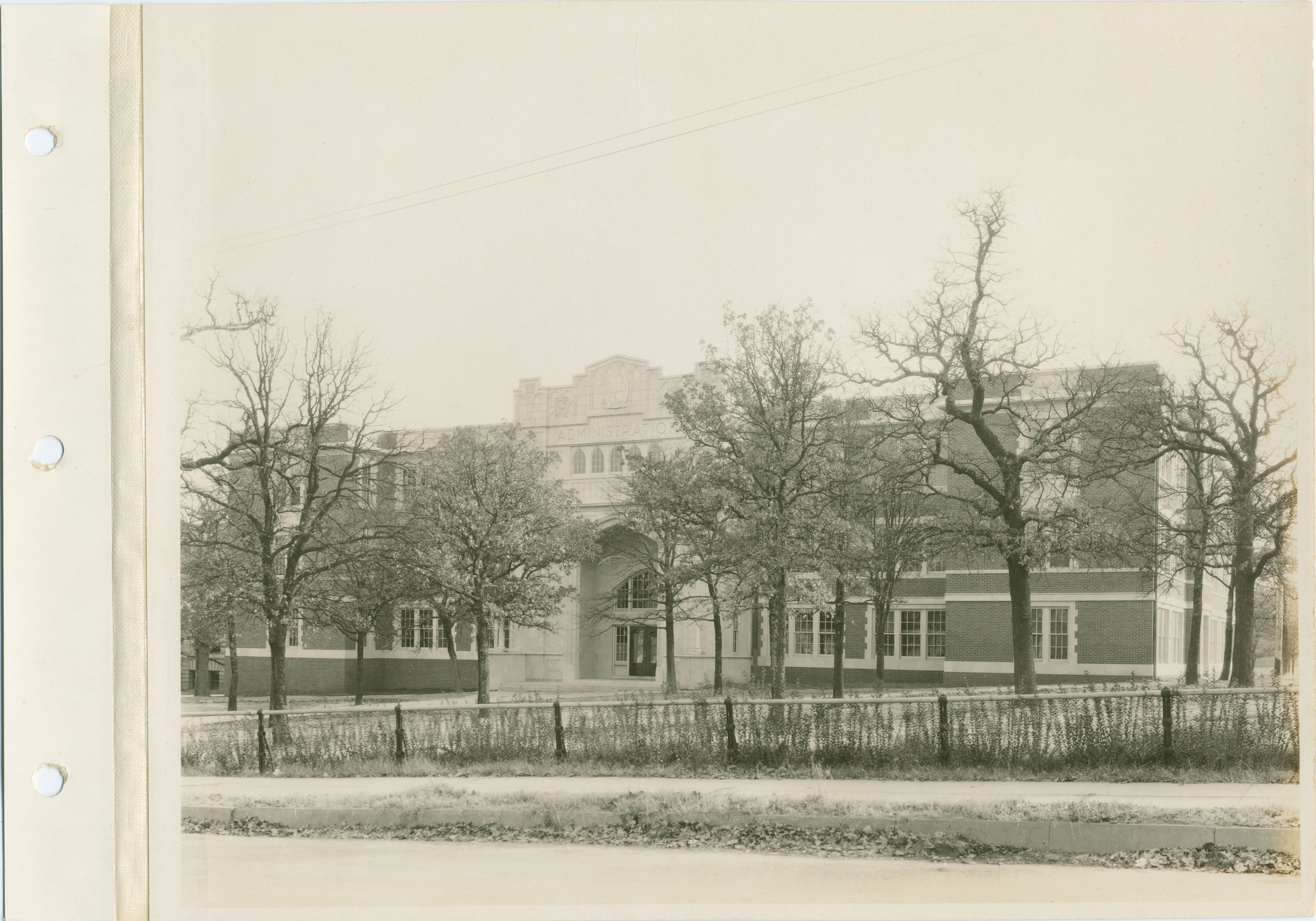
Almost all of the photographs in the collection document the work of the Atlantic Terra Cotta Company in Texas. The majority are identified by location and building name; some are dated.
Administrative documents consist of a legal job contract form, and a three-page written description of standard specifications for terra cotta manufacture and installation.
The majority of the records in this collection provide a rich visual resource of terra cotta products and their use during the early 1900s. Firm brochures include illustrated catalogs of specific terra cotta items, listing dimensions, colors available, and sometimes prices. Issues of Atlantic Terra Cotta's monthly publication contain mostly full page black and white photographs illustrating terra cotta use. These illustrations are accompanied by captions describing the building's history, design, and construction. Approximately one-third of the periodicals relate to historic terra cotta use in Europe; the remainder highlight the work of Atlantic Terra Cotta.
-Kathy Martinson
Dates
- Creation: 1914-1941
Creator
- Atlantic Terra Cotta Company (New York, N.Y.) (contributor, Organization)
Policies Governing Use and Access
This collection is open for research. Researchers must register and agree to copyright and privacy laws before using archival materials. As all or portions of this collection may be housed off-site, advance notice of at least three working days is required for retrieval. Certain items may require additional time for flattening or humidifying before they can be viewed. Access is by appointment only. Please contact the archives' reference staff for further information.
Manuscript collections and archival records may contain materials with sensitive or confidential information that is protected under federal or state right to privacy laws and regulations. Researchers are advised that the disclosure of certain information pertaining to identifiable living individuals without the consent of those individuals may have legal ramifications (e.g., a cause of action under common law for invasions of privacy may arise if facts concerning an individual's private life are published that would be deemed highly offensive to a reasonable person).
The Alexander Architectural Archives operate in accordance with applicable federal or state laws and regulations, providing unrestricted access to university records not covered by state and federal right to privacy acts.
The Alexander Architectural Archives, The University of Texas Libraries, and The University of Texas at Austin, assume no responsibility for infringement of literary property rights and copyright or for liability to any person for defamation or invasion of privacy that results from a researcher's use of collections.
Researchers agree to indemnify and hold harmless The University of Texas at Austin, and their officers, employees, and agents from and against all suits, claims, actions, and expenses arising out of use of collections held by the libraries. Please alert staff if anything inappropriate is found during research.
Copyright interests in this collection may not have been transferred to the University of Texas. Researchers assume full responsibility for observing all copyright, property, and libel laws as they apply. Additionally, the public use of material must be cited. See citation information below.
Administrative History of the Atlantic Terra Cotta Company (1908-1943)
During the first quarter of the 20th century the Atlantic Terra Cotta Company was the largest producer of architectural terra cotta in the world. By 1908 the firm operated four plants including Perth Amboy and Rocky Hill, N.J.; Staten Island, N.Y. and Eastpoint, Ga. (near Atlanta). The company maintained branch offices in New York, Atlanta, Philadelphia, Dallas and Newark, N.J. William H. Wilson presided as company president during peak years of production.
National production of terra cotta quadrupled from 1900 to 1912, and the industry prospered throughout the 1920s. Terra cotta provided the ideal facade for the high rise, metal skeletal, constructed buildings. Atlantic Terra Cotta manufactured products for forty percent of the terra cotta buildings in New York City.
Terra cotta's light weight, ease of production and low maintenance offered greater flexibility in design compared with traditional building materials such as stone and iron. This flexibility allowed company craftsmen to accommodate any style. Craftsmen prepared scale models from architects' drawings. From these they made full scale clay models from which they pulled plaster molds. Then they pressed one and a half inch clay slabs into the plaster molds, separating the clay elements from the molds after they dried. Finally the craftsmen glazed and fired the clay elements to achieve the final product.
Flexibility of the terra cotta medium allowed manufacturers to adapt to changing architectural styles of the 1920s. Contemporary geometric building designs were enhanced by the rich coloring, texture, and patterning of terra cotta products. Machine extrusion techniques mechanized terra cotta manufacture in the late 1920's and allowed for mass production of terra cotta veneers that were both practical and fireproof.
In the early 1930s, both the failure of the economy and new construction technologies contributed to the decline of the terra cotta industry. Architectural design trends at that time stressed economy and utility; and architects preferred more contemporary materials such glass and steel. The Atlantic Terra Cotta Company closed in 1943.
Significant buildings utilizing Atlantic Terra Cotta products include the Flat Iron building at 75 Fifth Avenue in New York (1901), the Woolworth Building in New York which was the world's tallest building from the time of its completion in 1908 until 1930, the Union Trust building in Detroit (1928) and the Philadelphia Museum of Art (completed c. 1933).
-Kathy Martinson
Sources
"The Atlantic Terra Cotta Co." Friends of Terra Cotta 1, no. 4 (Fall/Winter 1982-83): p. 4-5.
Tunick, Susan. "A Directory of Significant Terra Cotta Buildings in New York City." SITES 18 (1986): p. 42-58.
Tunick, Susan. "The Story of Terra Cotta." SITES 18 (1986): p. 42-58.
Partial Extent
0.83 Linear Feet
Partial Extent
138 photographs
Language of Materials
English
Abstract
The Atlantic Terra Cotta Company was the largest producer of terra cotta in the world during the first quarter for the 20th century. Records in the Atlantic Terra Cotta Company collection provide a rich visual resource of terra cotta products and their use during the early 1900s. Record types include administrative documents, firm brochures, blueprints, periodicals, and photographs.
Other Finding Aids
Unpublished inventory in Archive.
References to works by or about Atlantic Terra Cotta Company
- "The Atlantic Terra Cotta Co." Friends of Terra Cotta 1, no. 4 (Fall/Winter 1982-83): p. 4-5.
- Bronson, Steve. "The Forgotten Pediment of the Philadelphia Museum of Art." National Sculpture Review 25, no. 1 (Spring 1976): p. 16-17.
- Tunick, Susan. "Architectural Terra Cotta: Its Impact on New York City." SITES 18 (1986): p. 4-38.
- Tunick, Susan. "A Directory of Significant Terra Cotta Buildings in New York City." SITES 18 (1986): p. 58-64.
- Tunick, Susan. "The Story of Terra Cotta." SITES 18 (1986): p. 42-58.
Collection Processors
Materials processed by: Kathy Martinson, October 1992; revision by Katie Pierce Meyer, June 2026
- Title
- Atlantic Terra Cotta Company records
- Author
- Inventory prepared by Kathy Martinson
- Date
- 1992
- Language of description
- English
- Script of description
- Latin
Repository Details
Part of the Alexander Architectural Archives Repository
University of Texas Libraries
101 E. 21st Street
Austin Texas 78712 United States
(512) 495-4621
apl-aaa@lib.utexas.edu